Proudly serving Tuscaloosa
Vinyl Siding Installation Tuscaloosa
- Built for Alabama storms
- Serving Tuscaloosa County
- Upfront, no-surprise pricing
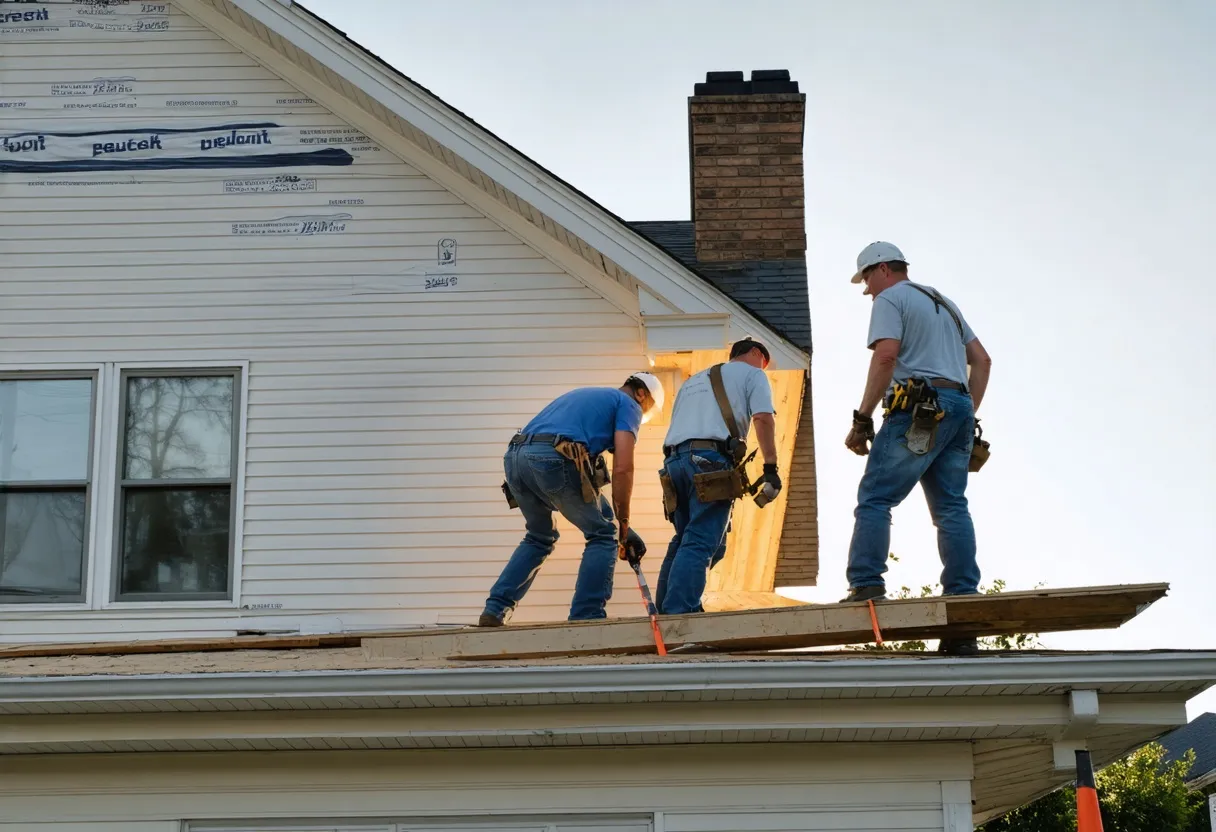
Vinyl siding installation in Tuscaloosa isn't just a cosmetic upgrade — it's the first line of defense on a home that sits in a corridor known for sudden, severe summer thunderstorms and the straight-line wind that comes with them. The panel you choose matters, but what matters more is whether the crew fastens, flashes, and drains that panel the way the manufacturer actually specifies. A lot of vinyl siding fails in Tuscaloosa County not because vinyl is a weak material, but because it was nailed too tight, lapped wrong, or installed over sheathing nobody bothered to check first.
This page is built around that reality: what wind-aware vinyl installation actually looks like here, how the process runs from estimate to final walkthrough, what panel grade and insulation choices mean for your energy bills, and what genuinely drives the price up or down when you're comparing quotes. No invented numbers, no vague lump sums — just what a properly installed, storm-ready vinyl siding job in Tuscaloosa involves and how to evaluate whether a contractor is giving you that or something thinner.
What Wind-Aware Vinyl Installation Looks Like in Tuscaloosa County
Our Storm-Ready Vinyl Installation Process, Step by Step
We assess square footage, existing siding condition, corner and gable count, and which elevations take the brunt of prevailing storm wind before writing a single number.
Homes on open lots or with unshielded second-story walls in Tuscaloosa County get matched to a heavier-gauge or insulated panel rated for higher wind exposure than a sheltered infill lot would need.
Old siding comes off, sheathing gets checked for hidden water damage, and house wrap and flashing are repaired or replaced before a single new panel is hung.
Panels are hung with correct nail placement, lap direction, and clearance for thermal movement — the details that determine whether siding holds through a wind event or peels off it.
We point out corner detailing, flashing, and any areas that see the most wind and rain, so you know exactly what to watch after the next storm season.
Panel Grades, Wind Ratings, and Energy-Efficient Vinyl Explained
Not all vinyl siding is built to the same standard, and in a market that sees severe summer storms most years, that difference matters more here than it would in a milder climate. Panel gauge — the thickness of the vinyl itself — affects how much wind load and impact a panel can absorb before it cracks or flexes loose. Lighter, thinner panels are cheaper up front and fine on sheltered walls, but on exposed elevations that catch the worst of a passing storm system, a heavier-gauge or impact-modified panel installed to manufacturer spec is the difference between siding that rides out the wind and siding that ends up in the yard next door.
Standard vs. insulated vinyl
Standard vinyl siding is hollow-backed — it's a shell over your existing wall assembly. Insulated vinyl siding has rigid foam laminated directly to the back of the panel, which does two things at once: it adds continuous insulation across the wall (closing the thermal gaps between studs that standard siding can't touch), and it stiffens the panel itself, which helps it resist flexing and denting under wind load and hail impact. For Tuscaloosa's long cooling season, that continuous insulation layer reduces how hard your HVAC system has to work to hold temperature through the summer. It costs more per square foot than hollow-back vinyl, but on a full re-side it's doing double duty — comfort and structural stiffness — rather than one or the other.
Why installation quality outranks the panel spec sheet
A manufacturer's published wind rating assumes the panel is installed exactly to spec — correct nail placement, correct overlap, correct starter strip and J-channel work. Deviate from that, and the wind rating on the box stops meaning anything. This is the part a spec sheet can't show you and a lowball bid usually skips: the labor discipline of nailing centered in the slot instead of tight, lapping panels in the direction that sheds wind-driven rain instead of collecting it, and flashing every penetration instead of caulking over a gap and calling it done.
One Written Estimate, No Change-Order Surprises
Every vinyl siding estimate we write breaks out panel type, tear-off, substrate repair, and labor as separate line items — not a single bottom-line number you have to take on faith. If we find rotted sheathing once tear-off starts, you'll know before it's repaired, not after it shows up on the final invoice.
Vinyl Siding Installation Questions Tuscaloosa Homeowners Ask
Quality vinyl installed to manufacturer spec — correct fastening, proper overlap, adequate panel gauge for the exposure — holds up well through typical severe summer storm activity. Most failures trace back to installation shortcuts (panels nailed too tight, missed flashing) rather than the material itself.
If you're doing a full re-side and want lower cooling loads through the summer, insulated vinyl's continuous foam backing adds real value over hollow-back panels. For a small patch or repair matching existing siding, standard vinyl matching what's already there usually makes more practical sense.
Sometimes, if the existing siding and the sheathing underneath are sound and local code allows it. We inspect first — installing over a hidden moisture problem just delays and worsens it, so we'll tell you honestly whether your home is a good candidate.
Generally yes. Siding replacement typically requires a permit under local code, with specific requirements around fastening and weather barrier work that an inspection checks for. We handle the permitting as part of the installation so it's not on your plate.
The panel is the same product either way — the difference is in labor: nail placement, expansion clearance, lap direction on exposed walls, and flashing detail at every penetration. That's what a manufacturer's wind rating actually depends on, and it's the part a bid needs to spell out rather than assume.
We inspect for cracked or punctured panels, loosened fasteners, and compromised flashing, and provide itemized documentation you can use for an insurance claim if the damage is storm-related.
What Drives Vinyl Siding Pricing When Wind-Resistant Installation Is the Standard
Vinyl siding cost in Tuscaloosa isn't one flat number, and the biggest swings usually come from factors that have nothing to do with color or brand. Panel gauge and whether you're choosing standard or insulated vinyl move the material cost meaningfully. House complexity — the number of corners, gables, dormers, and window and door surrounds — adds labor time regardless of panel choice, because cutting and fitting around detail work takes longer than a simple rectangular wall. Tear-off versus installing over existing siding (where condition and code allow it) changes both labor and disposal cost. And substrate repair, when tear-off reveals rotted or water-damaged sheathing, is the single most common reason a final invoice differs from an initial walk-through estimate — which is exactly why we itemize that as its own line rather than folding it into a guess.
Height and access matter too: two-story sections and steep grading slow a crew down regardless of the material going up. And because Tuscaloosa County requires a permit for siding replacement, that cost and process should already be built into your quote rather than handed to you as a separate task. We install and repair vinyl siding throughout Tuscaloosa and the surrounding communities — Northport, Cottondale, and North River included — and if you're not sure whether your address falls in normal scheduling range, ask; most jobs in and immediately around Tuscaloosa County do.
Get Your Free Quote
Tell us about your home and we'll follow up with clear pricing and options.
More siding installation services
Ready to Talk Siding?
Reach out for a free, no-obligation quote on your project.